A door that closes but pops back open is more than an everyday annoyance. It can make a bedroom feel less private, let a bathroom door drift open, or leave an exterior door without a dependable close. The good news is that many latch problems are not really latch problems. They happen because the door is meeting the frame a little too high, too low, or too far to one side.
Before shopping for a new handle, take a moment to watch the door as it closes. A door that once latched normally often needs a small adjustment, not a full replacement. The trick is to find the point where the door is changing shape or position, then make the smallest repair that restores a smooth close.
Start by Watching How the Door Meets the Frame
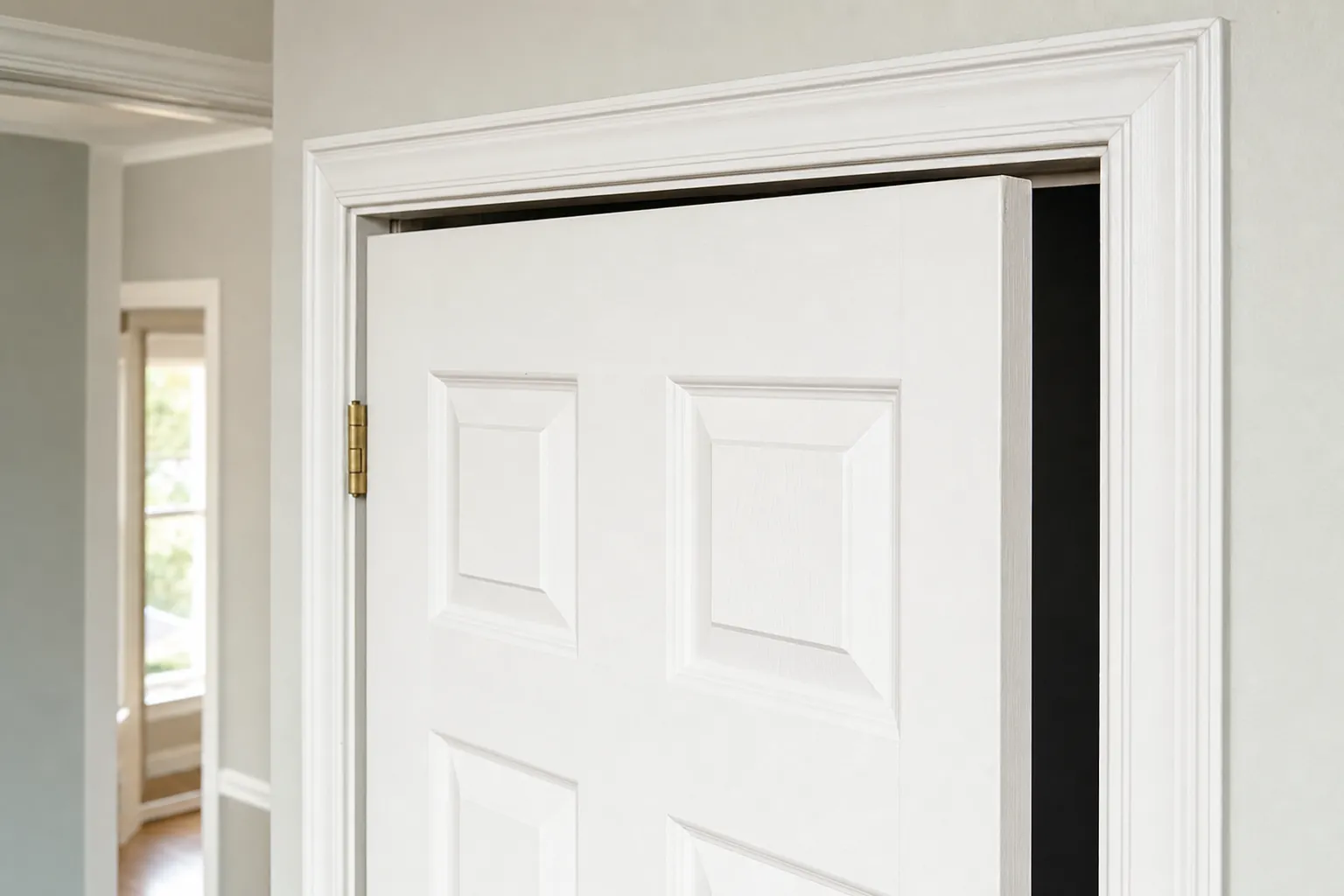
Close the door slowly while looking at the gap around all four sides. A consistent reveal is a good sign. A gap that gets tight at the top, rubs near the hinge side, or opens wide near one corner points to the area that needs attention. Do not force the door shut. That can scrape paint, loosen hardware further, or hide the clue you need to see.
Pay attention to the timing. A door that only acts up after humid weather may be swelling slightly. A door that began dragging after someone leaned on it, moved furniture through it, or noticed loose screws may have shifted at the hinges. A problem that appeared after painting or replacing trim can also come from a small change to the frame opening.
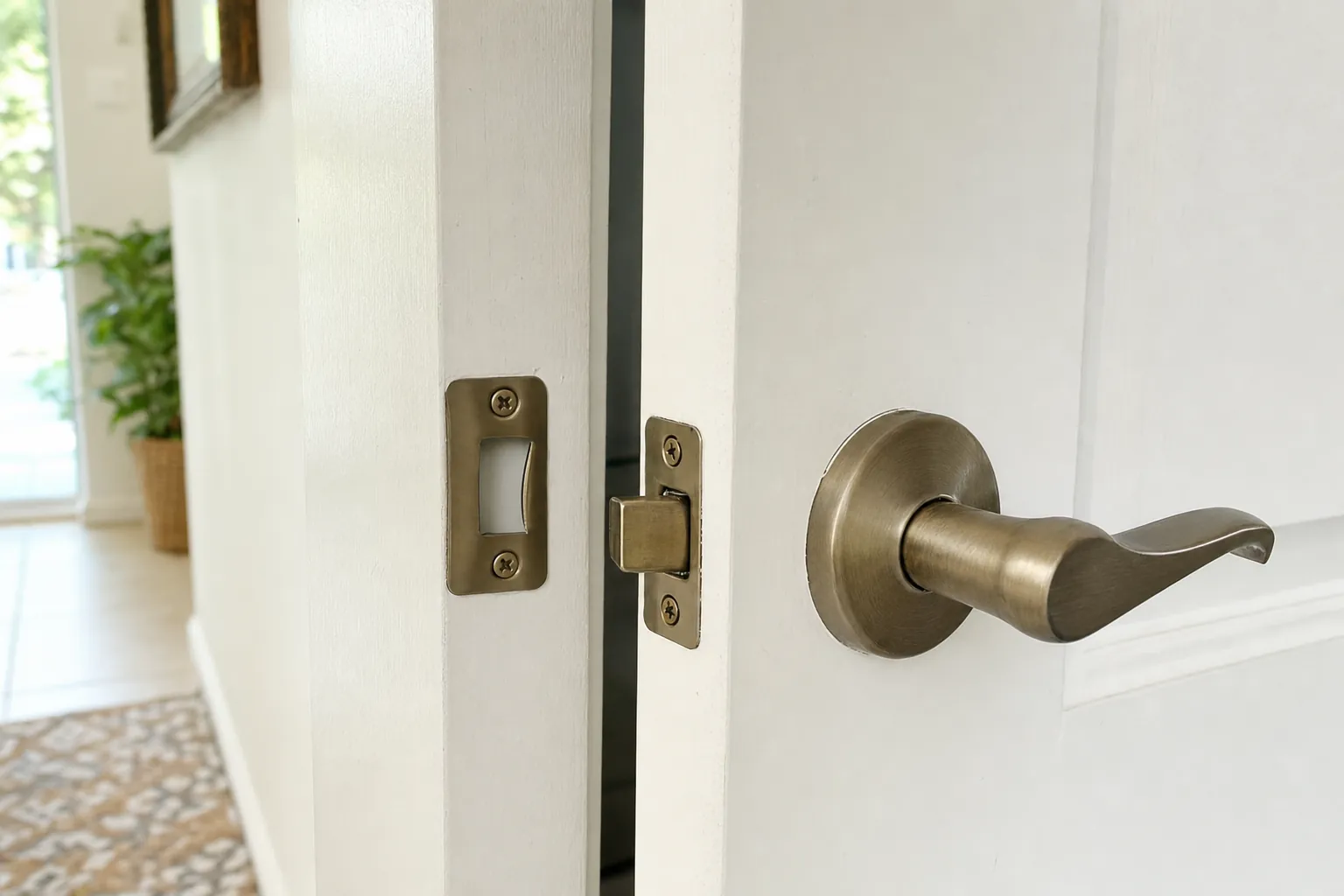
The latch needs to line up cleanly with the opening in the frame hardware. If it hits the top, bottom, or side edge first, the handle can feel as though it is working while the door still refuses to stay shut. The goal is to identify that mismatch before changing anything.
Check for Rubbing, Dragging, or an Uneven Gap
Look for fresh scuffs in the paint, a shiny rub mark on the edge of the door, or a corner that touches the frame before the rest of the door. Those marks help narrow down the cause. When the top hinge-side corner rubs, the door may be sagging. When the top of the door rubs on the frame, seasonal swelling or a tight opening may be involved. When the door drags at the floor, the same hinge shift can affect both the floor clearance and the latch height.
For a quick check, stand back a few feet and compare the space around the door with a nearby door in the home. You are not looking for a perfectly engineered gap. You are looking for a gap that clearly changes from one side to the other. That simple visual check often explains why a door used to latch without a problem and now needs an extra push.
Do not start by cutting, sanding, or planing the door. Those are bigger changes, and they should come only after you know whether loose hardware or a minor alignment issue is the real cause. A door that is removed too aggressively can end up with a visible uneven edge or a gap that is too large when the weather changes again.
Tighten the Hinge Screws First
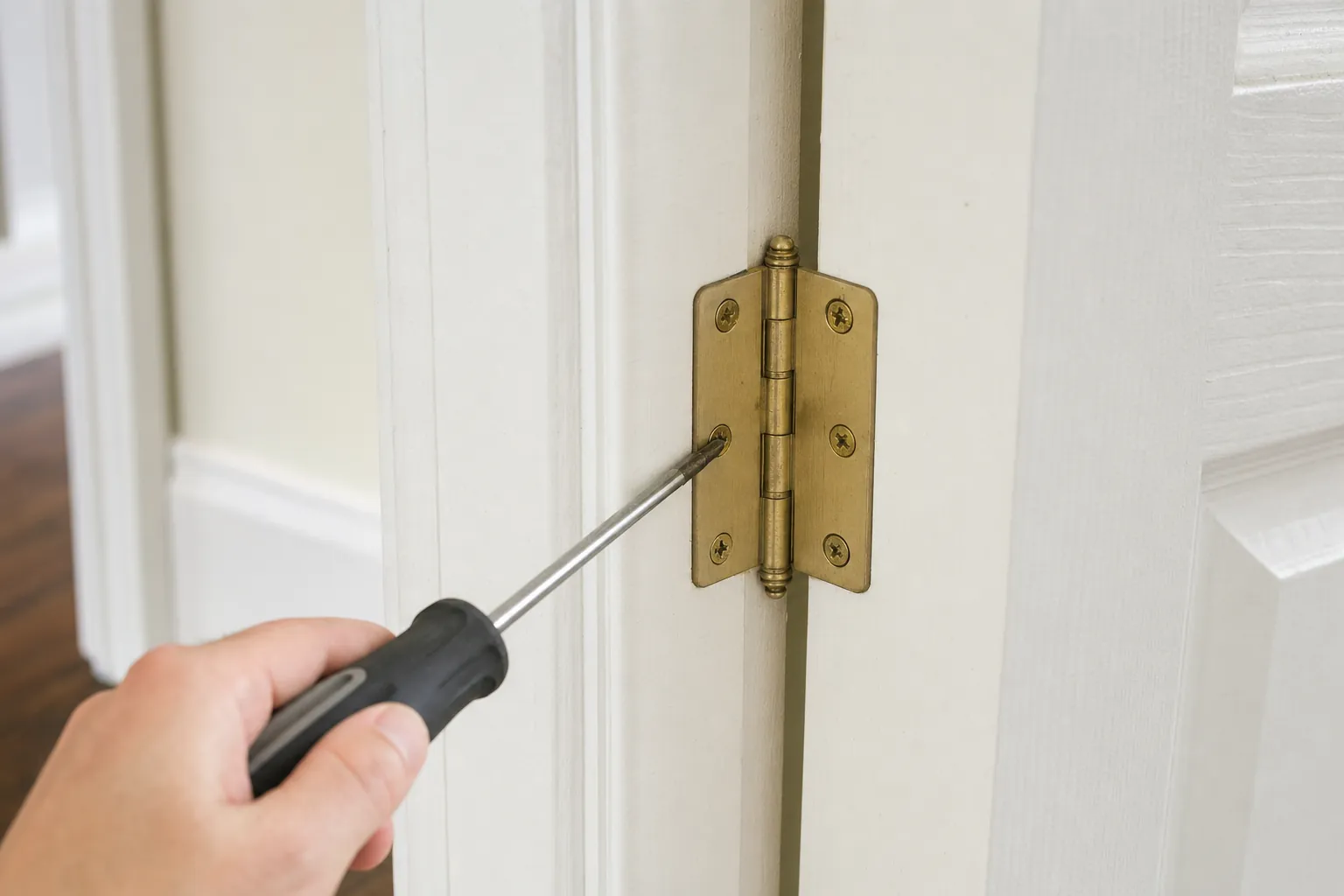
Loose hinge screws are one of the simplest causes of a door that will not latch. When screws work loose, the door can drop by a small amount. That small movement is enough to make the latch meet the frame opening at the wrong height. Check every hinge, especially the top hinge, because it carries much of the door's weight.
Use a screwdriver that fits the screw head properly and tighten each screw until it is snug. Avoid overtightening. If a screw turns but never tightens, the hole may be worn and the screw may no longer have solid wood to grip. That is a repair issue, not a reason to keep turning the same screw harder.
After tightening, test the door again before making another adjustment. A loose top hinge can create a surprisingly large change at the closing edge. If the door now meets the frame more evenly and the latch catches, stop there. The best repair is often the smallest one.
Confirm Where the Latch Is Missing
If the hinges are firm but the door still will not stay closed, close it slowly and listen. A clean close usually has one smooth movement as the latch enters the opening. A scrape, click against an edge, or need to lift the door slightly by the handle suggests that the alignment is still off.
A simple way to see the contact point is to place a small amount of removable chalk or washable marker on the end of the latch, then close the door gently. The mark left on the frame hardware can show whether the latch is meeting too high, too low, or to one side. Wipe it away once you have made the check. This is only a guide for finding the problem, not a reason to make a large adjustment.
If the latch does not extend fully when the handle is released, or feels sticky before it reaches the frame, the handle assembly itself may be worn or dirty. In that case, an alignment change alone will not solve the issue. Replacing the worn hardware may be the cleaner fix, especially when the handle has already been loose, stiff, or unreliable for a while.
Make Small Alignment Changes, Then Test Again
When the latch is clearly missing the opening by a small amount, a minor frame-hardware adjustment can restore the close. Work in very small increments and test the door after each change. It is easy to move the hardware too far, which creates a new problem on the opposite side.
- Start with the hinges. Tighten secure screws and correct any obvious looseness before adjusting anything on the frame.
- Mark the contact point. Find out whether the latch is meeting high, low, or sideways instead of guessing.
- Adjust only as much as needed. Small changes are easier to reverse and are less likely to damage paint or the frame.
- Close the door gently after each change. Test for a smooth close, not just a door that can be pushed hard enough to stay shut.
- Stop when the door closes naturally. A properly aligned door should not need lifting, slamming, or a shoulder against it.
A recurring problem can mean the frame or door is moving, not just that one part needs adjustment. That is especially true when screws have loosened more than once, the trim is pulling away, the door has a new crack near a hinge, or the gap has changed noticeably. Those signs are worth addressing before a small alignment problem becomes a damaged door or jamb.
Know When the Handle or Frame Needs More Than an Adjustment
Some door problems do need a repair beyond tightening screws. A handle that feels floppy, a latch that does not spring back, cracked wood around a hinge, or a frame that flexes when the door closes all point to a part that cannot be fixed with a quick alignment check. Exterior doors also deserve extra care because a dependable close affects weatherproofing as well as security.
Be careful with doors that bind severely, have cracked glass, show damage around the frame, or lead to a garage, exterior space, or shared access area. Do not keep forcing them into place. A practical repair can include securing loose hinges, repairing damaged wood, correcting a shifted frame, replacing worn household hardware, and restoring weatherstripping or trim when related issues are present.
Keep the Repair in Proportion
It is tempting to replace every part when a door acts up, but that can add cost without solving the real cause. A loose hinge screw and a worn handle can feel similar when you are standing at the door, yet the repair path is completely different. Watch the door, find the first point where it rubs or misses, and correct that issue before changing another part.
That same approach helps with other small home repairs. A wall stain may need a moisture check before it needs paint, and a loose cabinet door may need a hinge adjustment before it needs replacement. For more help with repair decisions after a leak, read Signs of Water Damage in Walls and Drywall Water Damage Repair.
When Tip-Top Services Can Help
Tip-Top Services can help with everyday door and household hardware repairs across Broward County and Boca Raton. That can include loose hinges, doors that rub or will not close smoothly, worn knobs or handles, trim touch-ups, weatherproofing, and the related small repairs that often show up on the same list.
Browse the full handyman service list or see examples of completed home repairs. For a practical repair visit, request a quote and include a photo of the door edge and frame if you can. It helps make the first conversation more useful.
Need a door adjusted or repaired?
Tip-Top Services handles practical door, hardware, trim, and small home repairs across Broward County and Boca Raton.
Request a QuoteFrequently Asked Questions
Why does my door close but not stay latched?
The most common reason is alignment. The door may have sagged slightly at the hinges, the opening may have shifted with humidity, or the latch may be meeting the edge of the plate instead of the opening. Start by looking for rubbing, loose hinge screws, and an uneven gap around the door.
Can a door latch issue be fixed without replacing the handle?
Often, yes. A door that once worked normally may only need hinge screws tightened or a small alignment adjustment. Replace the handle only when the latch itself does not extend and retract smoothly, the return spring feels weak, or the hardware is visibly worn or damaged.
Why does a door stop latching when the weather changes?
Wood doors, frames, and trim can expand or shift slightly as temperature and humidity change. A small change can make a previously centered door rub at the top, drag on the floor, or meet the frame a little too high or low. The goal is to identify where the door is moving before adjusting any hardware.
When should I call a handyman for a door that will not latch?
Call for help when the door is binding badly, the frame is cracked or loose, hinge screws will not hold, the opening has shifted, or repeated small adjustments have not fixed the problem. An exterior door that does not close securely also deserves prompt attention.
Related Posts
Drywall Water Damage Repair: Save It or Replace It?
Know when a wall needs drying, a repair, or a larger replacement before fresh paint goes on.
Read the guide
Signs of Water Damage in Walls: What to Do Next
Spot stains, soft drywall, peeling paint, and other warning signs before planning a repair.
Read the guide